
Applied Behavior Analysis (ABA) Therapy
Applied Behavior Analysis (ABA) Therapy
Applied Behavior Analysis (ABA) Therapy is a scientifically proven approach that helps individuals, especially children with autism, develop positive behaviors and essential life skills. ABA focuses on breaking down complex skills into smaller, manageable steps and reinforcing desired behaviors through positive reinforcement. This therapy enhances communication, social skills, and independence while reducing challenging behaviors. ABA is highly individualized, tailored to each person's needs, and applied in various settings such as home, school, or clinical environments. Through consistent practice and monitoring, ABA fosters long-term improvements in learning, adaptability, and overall quality of life, empowering individuals to reach their full potential.
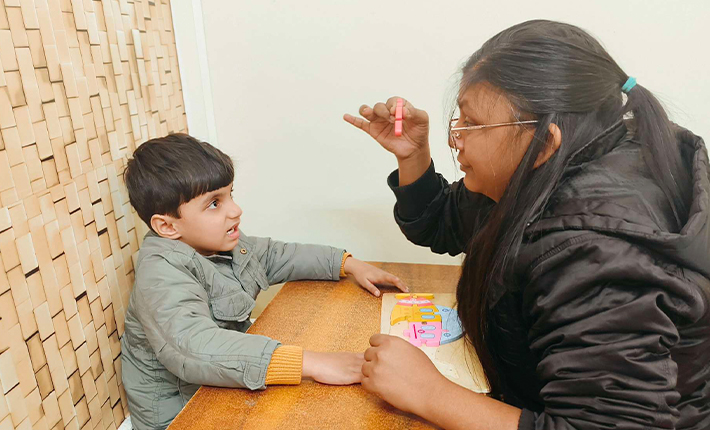
How is it Done?
Applied Behavior Analysis Therapy is a highly individualized process that begins with a thorough assessment of the child's communication abilities. A Speech-Language Pathologist (SLP) typically conducts the assessment, which may include:
Parent/Caregiver Interviews:
Input from parents and caregivers provides valuable insights into the child’s communication skills in everyday settings.
Observation:
The SLP observes the child in different situations, such as playing or interacting with others, to identify communication challenges.
Standardized Tests:
These tests measure various aspects of speech and language, such as vocabulary, comprehension, articulation, and fluency.
Data Collection and Monitoring:
Ongoing Data Collection:
ABA therapy is data-driven, meaning that every session involves collecting data on the child’s performance. This data helps the therapist track progress, measure the effectiveness of interventions, and make informed decisions about adjustments to the treatment plan.
Analysis of Data:
The ABA regularly reviews the data to assess the child’s progress toward their goals. If the data shows that a child is not making expected progress, the treatment plan may be modified, which could include changing the reinforcement schedule, adjusting the level of prompting.
Generalization:
One of the critical goals in ABA therapy is ensuring that the skills learned in therapy sessions generalize to other environments and situations. This means that the child can apply what they’ve learned not just in the therapy room but also at home, school, and in the community.
ABA therapy’s structured, evidence-based approach has been shown to lead to meaningful improvements in communication, social skills, academic performance, and adaptive behaviors. By focusing on positive reinforcement and individualized teaching strategies, ABA helps children develop the skills they need to succeed in everyday life.
Book An Appointment
Donate us to achive our goal
Beguiled and demoralized by the charms of pleasure of the moment, so by desire,
that they cannot foresee.
that they cannot foresee.